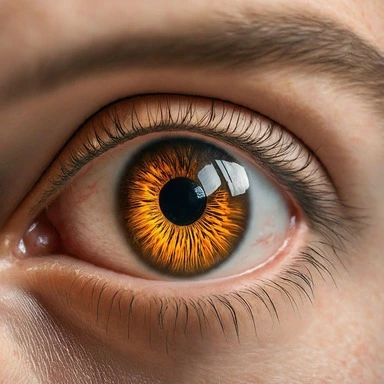
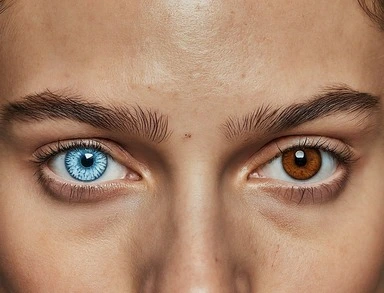
Eye Color Calculator

Calculate the eye color based on the eye colors of both parents and grandparents.

Eye Color Calculator Tool

Parents
Grandparents (optional)

How to Use Eye Color Calculator

Our calculator is designed to be user-friendly and informative. Here's how to use it:

  1. Select Parent Eye Colors: Choose the eye color of parents from the dropdown menus.
  2. Input Grandparent Eye Colors: Select the eye colors of all four grandparents.
  3. Calculate: Click the "Calculate" button for the results.
  4. Interpret Results: The calculator will show probabilities for different eye colors, represented by colorful bars and percentages.

Remember, this calculator provides estimates based on general genetic principles and does not guarantee your child's eye color.

To get the most accurate estimate, try to fill in as many grandparent eye colors as you can. The more genetic information the calculator has, the better it can account for recessive traits that may skip a generation. If a grandparent's eye color is unknown, simply leave that field set to "Unknown / Don't know" — the calculator will still produce a result based on the available information.

After each calculation, you can use the Reset button to clear all selections and enter a new set of family eye colors. This makes it easy to compare different scenarios, such as planning for a second child or exploring how a different grandparent's color affects the outcome.

Understanding the Results

The calculator shows probabilities for various eye colors. Here is what the results mean:

  • Higher percentages indicate a greater likelihood of that eye color.
  • Even colors with lower percentages are possible.
  • The results are based on known genetic factors and family history.

The probability bars are color-coded to match the predicted eye color, making it easy to see the likelihood at a glance. The bar width represents the percentage chance, while the label shows the precise calculated value to two decimal places.

It is important to understand that the percentages shown are theoretical probabilities, not guarantees. Human genetics is governed by chance at the level of individual gametes, which means two siblings with the same parents can have very different eye colors. A 70% probability for brown eyes, for example, means that roughly 7 out of 10 children born to parents with identical genetic profiles would be expected to have brown eyes — but there is no certainty for any individual child.

Only eye colors with a non-zero probability are shown in the results. Colors that are genetically impossible given the family input are automatically excluded, keeping the output clean and easy to read.

The Science Behind Our Calculator

Our eye color calculator uses a simplified model of genetic inheritance, considering:

  1. The frequency of eye colors in the family
  2. Known patterns of dominant and recessive traits
  3. The complexity of multiple gene interactions

While not 100% accurate, it provides a fun and educational estimate based on current genetic understanding.

The model assigns a dominance score to each eye color based on the genetic hierarchy established by modern research. Brown carries the highest dominance score, followed by amber, hazel, green, blue, and gray. Heterochromia carries the lowest score because it results from unusual pigmentation patterns rather than a straightforward dominant allele. The frequency of each color in the family is multiplied by a factor that reflects these dominance relationships, and the resulting values are then normalized to produce percentages that sum to 100%.

Including grandparents significantly improves predictive power. A father with brown eyes may carry a recessive blue-eye gene inherited from a blue-eyed grandfather. By incorporating that grandparent's eye color, the model can detect the likely presence of that hidden allele and adjust the probability of a blue-eyed child accordingly. This three-generation approach is what sets this tool apart from simpler two-parent calculators.

The algorithm deliberately accounts for the real-world observation that eye color inheritance is polygenic — influenced by many genes, not just one. Rather than simulating individual alleles, the model uses the observed family distribution as a statistical proxy for the family's combined genetic load, then applies dominance adjustments to weight the output toward the more expressed colors while preserving the possibility of lighter or rarer colors.

What Determines Eye Color?

Eye color is determined by multiple genes, with two main ones playing a significant role:

  1. OCA2 gene: Responsible for brown and blue eyes
  2. HERC2 gene: Affects the OCA2 gene's expression

These genes influence the amount and type of melanin (pigment) in the iris, giving eyes color.

The OCA2 gene encodes a protein called the P protein, which plays a role in the production and distribution of melanin within the melanocytes of the iris. A functional OCA2 gene leads to higher melanin concentrations in the front layer of the iris, producing brown eyes. A mutation or altered expression of OCA2 reduces melanin, leading to lighter eye colors such as blue or gray.

The HERC2 gene sits adjacent to OCA2 on chromosome 15 and contains a regulatory sequence that acts like a switch for OCA2 activity. A specific single nucleotide polymorphism (SNP) in HERC2 — the rs12913832 variant — is the primary genetic switch between blue and brown eyes in people of European descent. Individuals who inherit two copies of the brown-eye variant at this SNP will almost certainly have brown eyes. Those who inherit two copies of the blue-eye variant will likely have blue eyes. Heterozygotes can have any color from blue to brown depending on the full combination of variants across all relevant genes.

Beyond OCA2 and HERC2, researchers have identified at least 16 other genes that contribute to fine variation in eye color. These include SLC24A4 (linked to blue vs. non-blue), TYR (linked to melanin synthesis), TYRP1, and SLC45A2. The combined influence of all these genes means that eye color can vary continuously across a spectrum rather than falling neatly into a few discrete categories.

The physical structure of the iris also matters. The iris contains two main layers: the posterior epithelium, which is always heavily pigmented regardless of eye color, and the stroma (the front layer). In brown-eyed individuals, the stroma contains abundant melanin. In blue-eyed individuals, the stroma has very little melanin, and the color we see is the result of light scattering off the stromal fibers — the same Tyndall effect that makes the sky look blue. Green and hazel eyes fall between these extremes, with moderate melanin levels that interact with light scattering to produce the characteristic green or mixed-tone appearance.
Common Eye Colors

  1. Brown: The most common eye color worldwide
  2. Blue: Common in people of European descent
  3. Green: A rarer color, found in about 2% of the world's population — use our Eye Color Rarity Calculator to see how your color ranks globally
  4. Hazel: A combination of brown and green
  5. Gray: Similar to blue eyes, but with less melanin
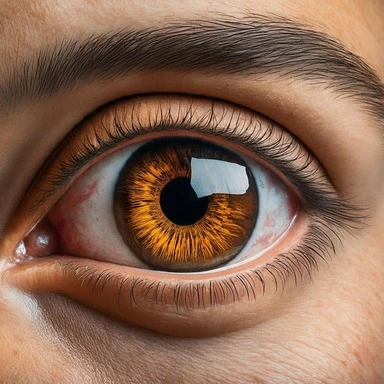
  6. Amber: A golden or copper tone, relatively rare
  7. Heterochromia: Different colors in each eye or multiple colors in one eye — see our Heterochromia Probability Calculator to estimate the likelihood for your family

Brown eye color dominates globally because many of the alleles that produce brown eyes are dominant over those producing lighter colors. Populations with ancient roots in Africa, the Middle East, South Asia, and East Asia have historically been almost exclusively brown-eyed. Blue eyes, which are thought to have originated from a single genetic mutation roughly 6,000 to 10,000 years ago, are most common in Northern European countries such as Estonia, Finland, and Sweden, where some surveys find blue-eye rates exceeding 80%. Green eyes are particularly associated with Ireland and Scotland, as well as parts of Central Asia. Hazel and gray eyes occupy an intermediate range and are found across many ethnic groups.

Eye color distribution changes when populations mix over generations. Children born to parents from different ethnic backgrounds — one brown-eyed and one blue-eyed, for example — may show any shade across the full eye color spectrum depending on the specific alleles they inherit. This genetic mixing is one reason why modern urban populations show considerably more eye color diversity than isolated historical communities did.

How Eye Color Is Inherited

Eye color inheritance is complex and doesn't follow simple dominant-recessive patterns. Here are some key points:

  • Brown eyes are generally dominant over lighter colors.
  • Two blue-eyed parents usually have blue-eyed children, but exceptions exist.
  • Green and hazel eyes result from a combination of genetic factors.
  • A child's eye color can be different from both parents due to recessive genes.

Early genetics textbooks taught that eye color followed a simple Mendelian model — brown dominant, blue recessive, two blue-eyed parents can only have blue-eyed children. Modern genetic research has overturned this simplified view. We now know that eye color is a polygenic trait influenced by many loci across several chromosomes, which is why the inheritance patterns we observe in real families are far more varied than the old textbook model predicted.

A classic example of the complexity is the well-documented — but statistically rare — occurrence of brown-eyed children born to two blue-eyed parents. This can happen when each parent carries a brown-eye allele in a heterozygous state at the HERC2 or OCA2 locus. Their blue eye color is expressed because the brown-producing allele is suppressed in them, but a child who inherits the brown allele from both parents would express brown. The probability of this outcome is low, which is why it surprises people, but it is genetically real.

Grandparents' eye colors matter precisely because of these hidden (recessive) alleles. Two brown-eyed parents whose own parents were all brown-eyed have a very different genetic profile from two brown-eyed parents who each had a blue-eyed parent. In the second scenario, the probability of a blue-eyed child is substantially higher, even though the parents themselves look identical phenotypically. This is the key insight that motivates the inclusion of grandparent eye colors in this calculator.

Factors Affecting Eye Color Prediction

Several factors can influence eye color prediction:

  1. Genetic Complexity: Eye color involves multiple genes, not just one or two.
  2. Recessive Genes: Parents can carry genes for eye colors they don't display.
  3. Genetic Mutations: Rare mutations can lead to unexpected eye colors.
  4. Ethnic Background: Different people have varying frequencies of eye color genes.

Ethnic background is a particularly important factor that no simple calculator can fully incorporate. Eye color allele frequencies vary dramatically between populations. A brown-eyed person of Irish descent is far more likely to carry recessive blue-eye alleles than a brown-eyed person whose ancestors have been from sub-Saharan Africa for thousands of generations. This population-level variation affects prediction accuracy in ways that are invisible when only looking at immediate family members.

Random de novo mutations are another source of unpredictability. While rare, new mutations at pigmentation genes can occasionally produce eye colors that have no direct precedent in either parent's lineage. These events are statistically improbable but not impossible, and they account for some of the truly surprising cases where a child's eye color seems to come from nowhere.

Environmental and health factors play a lesser but real role as well. Certain autoimmune conditions, trauma to the iris, chronic use of medications like prostaglandin-analog eye drops (used to treat glaucoma), and sun exposure over a lifetime can all cause gradual changes in iris pigmentation. These acquired changes do not affect inheritance — they cannot be passed on to children — but they can make a parent's current eye color a poor proxy for their underlying genetic profile if their eyes have changed significantly since childhood.

Interesting Facts About Eye Color

  • Babies' eye colors can change in the first few years of life — explore our Baby Eye Color Change Timeline to understand the stages.
  • All blue-eyed people may share a common ancestor.
  • Eye color can affect sensitivity to light.
  • In rare cases, eye color can change in adulthood.
  • Heterochromia (two different eye colors) can be genetic or caused by injury or disease.

The claim that all blue-eyed people share a common ancestor comes from a study by Hans Eiberg and colleagues at the University of Copenhagen, published in 2008. Their genetic analysis suggested that the mutation responsible for reducing OCA2 activity first appeared in a single individual in a population near the Black Sea between 6,000 and 10,000 years ago. Before that mutation, everyone on Earth had brown eyes. Blue eyes then spread through migration and population mixing across Europe, where they became particularly prevalent.

Newborns, especially those of European descent, often appear to have gray or slate-blue eyes at birth. This is because melanocytes in the iris have not yet produced their full complement of melanin. As the infant is exposed to light in the first months of life, melanin production is stimulated and the true eye color gradually becomes apparent. Most children's eyes have settled into their permanent color by 12 months, though some continue to change through age 3. Babies with darker ancestry typically have darker eyes from birth because their melanocytes produce more melanin regardless of light exposure.

People with lighter eye colors, especially blue and gray, tend to be more sensitive to bright light. This is because lighter irises contain less melanin to block incoming light from entering through the iris tissue itself. Darker irises with more melanin act as better light barriers, reducing glare and photophobia. This difference has no medical significance in normal conditions but can be relevant for occupations that involve bright light environments.

Limitations of Eye Color Prediction

It's important to understand that eye color prediction has limitations:

  • Genetic inheritance is complex and not fully understood.
  • Environmental factors can influence gene expression.
  • Rare genetic combinations can produce unexpected results.

The calculator doesn't account for all possible genetic factors.

No consumer-level eye color tool — including ours — can replicate the accuracy of a full genomic sequence analysis. Professional genetic services that analyze dozens of SNPs across multiple pigmentation genes can provide more precise probability estimates, particularly for distinguishing adjacent colors like hazel and green or gray and blue. Our calculator is best understood as a useful educational tool and a fun exploration of family genetics, not a clinical prediction instrument.

Users should also be aware that the eye color labels themselves are not biologically standardized. Different countries and cultures classify the same iris color differently. What one person calls "hazel" another might call "green" or "light brown." This subjectivity in labeling means there is inherent noise in any model that relies on self-reported eye colors as input. When in doubt, err toward the darkest honest description of the eye color.

The results of this calculator are provided for informational and entertainment purposes only. They should not be used to make medical, reproductive, or any other life decisions. If you have concerns about genetic conditions associated with eye color, including albinism or congenital heterochromia, please consult a licensed genetic counselor or ophthalmologist.

Eye Color Descriptions

Description of the different eye colors in detail:

Close-up of a brown eye showing deep chocolate tones

Brown Eyes

  • Appearance: Range from light golden brown to deep chocolate
  • Description: Most common eye color worldwide
  • Produced by high concentrations of eumelanin in the iris stroma
  • Dominant over all other eye colors in genetic inheritance
  • Estimated to occur in 70–90% of the global population
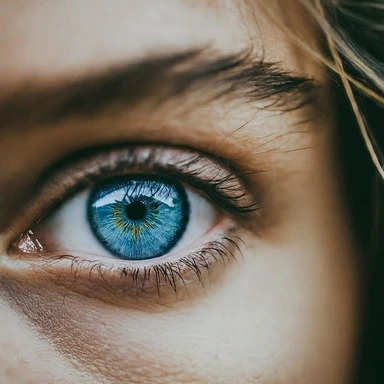
Close-up of a vivid blue eye with slight shade variations

Blue Eyes

  • Appearance: Can be light sky blue to deep ocean blue
  • Description: Common in people of European descent
  • Color results from low melanin and Tyndall light scattering in the stroma
  • Most prevalent in Northern European populations (up to 80% in some Scandinavian countries)
  • Thought to originate from a single genetic mutation 6,000–10,000 years ago
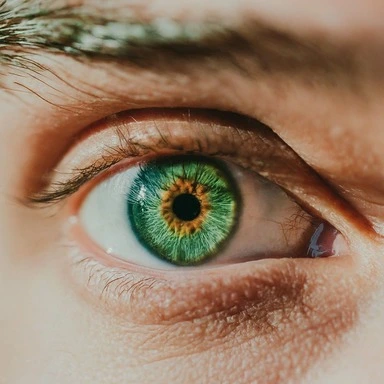
Close-up of a green eye with subtle gold flecks

Green Eyes

  • Appearance: Various shades of green, sometimes with gold flecks
  • Description: One of the rarest eye colors
  • Results from a moderate amount of melanin combined with Rayleigh scattering
  • Found in approximately 2% of the world's population
  • Most common in Ireland, Scotland, and parts of Central Asia
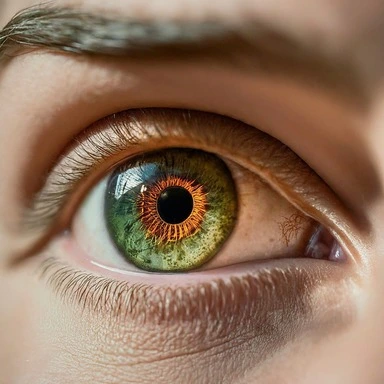
Close-up of a hazel eye showing green and brown tones

Hazel Eyes

  • Appearance: Mixture of green and brown, can appear to change color
  • Description: Often mistaken for light brown or green
  • Caused by a combination of melanin pigment and light scattering
  • Can appear to shift between green and brown depending on lighting and clothing
  • Often show a multi-ring pattern in the iris with different zones of color
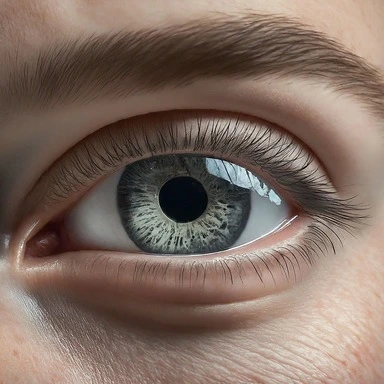
Close-up of a gray eye with cool, clear appearance

Gray Eyes

  • Appearance: Ranging from light silvery gray to deeper slate
  • Description: Often confused with blue eyes
  • Caused by very low melanin and collagen deposits in the iris stroma
  • May appear to shift between gray and blue in different lighting
  • Most common in Eastern Europe and some parts of the Middle East
Close-up of an amber eye with a distinctive golden hue

Amber Eyes

  • Appearance: Golden or copper tone, similar to honey
  • Description: Very rare, often mistaken for light brown
  • Caused by the pigment pheomelanin (yellow-red) rather than eumelanin (brown-black)
  • Distinguished from hazel by the absence of green tones and the solid golden color
  • Most common in South America, Asia, and parts of Southern Europe
Two eyes of different colors illustrating complete heterochromia

Heterochromia

  • Appearance: Two different colored eyes or multiple colors in one eye
  • Description: Can be complete (two different colored eyes) or partial (multiple colors in one eye)
  • Complete heterochromia: each eye is a different color
  • Partial (sectoral) heterochromia: a portion of one iris differs in color
  • Can be genetic (inherited) or acquired through injury, disease, or medication
  • Genetic heterochromia is linked to genes like SNAI2 and FOXC2

Eye Color Prediction Chart

This chart shows the possibility of a child's eye color based on the eye colors of both parents. The eye color percentages are approximate and based on general genetic principles.

Eye Color Probability Table
Parent 1 Parent 2 Brown Blue Green Hazel Gray Amber Heterochromia
Brown Brown 75% 6% 7% 7% 2% 2% 1%
Brown Blue 50% 30% 7% 7% 3% 2% 1%
Brown Green 50% 7% 30% 7% 3% 2% 1%
Brown Hazel 50% 7% 7% 30% 3% 2% 1%
Blue Blue 1% 80% 7% 7% 3% 1% 1%
Blue Green 1% 40% 40% 7% 9% 2% 1%
Blue Hazel 7% 30% 30% 25% 5% 2% 1%
Green Green 1% 25% 60% 7% 4% 2% 1%
Green Hazel 7% 20% 30% 35% 5% 2% 1%
Hazel Hazel 7% 15% 25% 45% 5% 2% 1%

Frequently Asked Questions

What does the Eye Color Calculator do?

The Eye Color Calculator predicts the probable eye color of a child based on the eye colors of both parents and grandparents.

How does the calculator work?

The calculator uses genetic inheritance principles to estimate the possibility of different eye colors by considering dominant and recessive genes from parents and grandparents.

What eye colors are supported by the calculator?

The calculator includes common eye colors such as brown, blue, green, hazel, gray, amber, and heterochromia (different-colored eyes).

Why are grandparents' eye colors included in the calculation?

Grandparents' eye colors provide additional genetic information, which helps improve the prediction's accuracy. A parent may carry a recessive eye color gene inherited from a grandparent that doesn't show in their own eyes but could appear in a grandchild.

Can two blue-eyed parents have a brown-eyed child?

While it is uncommon, it is possible due to the inheritance of recessive genes from previous generations. If each blue-eyed parent carries a hidden brown-eye allele, a child who inherits that allele from both parents can have brown eyes.

What does "heterochromia" mean in the calculator?

Heterochromia refers to having two different colored eyes or multiple colors within one eye, and it can be inherited or caused by other factors such as injury, inflammation, or medication.

How are probabilities displayed in the results?

The results are displayed as percentages with color-coded bars, indicating the probability of each eye color based on the provided genetic information. Only eye colors with a probability greater than zero are shown.

Can I use the calculator for multiple children?

Yes, you can use the calculator multiple times by inputting the eye colors of different family members to predict eye color for different children. Use the Reset button to clear the form before each new calculation.

Is the Eye Color Calculator accurate?

The predictions are estimates based on genetic principles. No tool can guarantee 100% accurate eye color prediction due to the complexity of human genetics. The calculator provides a useful probability guide, not a certainty.

Is the Eye Color Calculator free to use?

Yes, the Eye Color Calculator is completely free and accessible online for anyone to use. No registration, payment, or personal information is required.

Can a baby's eye color change after birth?

Yes. Newborns, especially those of European descent, often appear to have gray or blue eyes at birth because melanin production in the iris has not yet peaked. Eye color can change noticeably in the first 6 to 12 months and may continue to shift until around age three. After that, the color is generally stable for life.

What is the most common eye color in the world?

Brown is the most common eye color in the world, with estimates suggesting that 70 to 90 percent of the global population has brown or dark eyes. It is the predominant color across Africa, Asia, the Middle East, and Latin America.

What is the rarest eye color in the world?

Green is widely considered one of the rarest standard eye colors, found in approximately 2 percent of people worldwide. True violet or red eyes, which occur in certain forms of albinism, are technically rarer but are associated with a medical condition rather than typical eye color genetics.

Which genes determine eye color?

The OCA2 and HERC2 genes on chromosome 15 are the most important. OCA2 controls melanin production in the iris, while HERC2 regulates whether OCA2 is switched on or off. At least 16 additional genes contribute to the fine variation in eye color seen across the human population.

What is the difference between hazel and amber eyes?

Hazel eyes show a mixture of green and brown tones, often with a ring-like pattern, and may appear to shift color in different lighting conditions. Amber eyes are a solid golden or copper tone, caused by the pigment pheomelanin, with no green component. The key distinction is the presence of green in hazel and its absence in amber.

Can eye color change in adulthood?

Eye color is generally stable after early childhood. However, gradual changes can occur with aging — some people notice lightening or darkening over decades. Certain medical conditions (such as Horner's syndrome or Fuchs' heterochromic uveitis), medications (such as prostaglandin-analog eye drops), and, very rarely, sun exposure have been associated with changes in iris pigmentation.

How does melanin affect eye color?

Melanin is the pigment that gives eyes (and skin and hair) their color. High concentrations of dark melanin (eumelanin) in the iris stroma produce brown eyes. When melanin is scarce, light scatters off the stromal fibers in a way that produces blue or gray hues. Green and hazel eyes result from intermediate melanin levels combined with light scattering effects. Amber eyes are produced primarily by yellow-red melanin (pheomelanin) rather than dark eumelanin.

What is partial heterochromia?

Partial heterochromia (also called sectoral heterochromia) occurs when only a segment of one iris differs in color from the rest of that same eye. For example, an iris may be mostly blue with a distinct brown segment. This differs from complete heterochromia, where the entire iris of each eye is a different color. Both forms can be congenital (present from birth) or acquired later in life.

Do I need to sign up or create an account to use the calculator?

No. The Eye Color Calculator is completely open access. No registration, email address, or account creation is required. Simply choose the eye colors from the dropdowns and click Calculate.

Does the Eye Color Calculator store my personal information?

No. All calculations run entirely in your browser. The eye color values you enter are never transmitted to our servers, stored in a database, or linked to any personal profile. We do not collect, share, or sell any personal data entered into the calculator.

Can I use the calculator on a mobile device?

Yes. The Eye Color Calculator is fully responsive and works on smartphones, tablets, and desktop computers in any modern web browser without requiring any app download or installation.

References

  1. Wikipedia contributors. (2024, August 29). Eye color. Wikipedia. https://en.wikipedia.org/wiki/Eye_color
  2. Barrell, A. (2024, June 24). Eye color percentages around the world. Medical News Today. https://www.medicalnewstoday.com/articles/eye-color-percentage
  3. Cleveland Clinic Medical Professional. (2024, July 29). Eye colors. Cleveland Clinic. https://my.clevelandclinic.org/health/articles/21576-eye-colors
  4. Mackey, D. A. (2021). What colour are your eyes? Teaching the genetics of eye colour & colour vision. Edridge Green Lecture RCOphth Annual Congress Glasgow May 2019. Eye, 36(4), 704–715. https://doi.org/10.1038/s41433-021-01749-x
  5. Is eye color determined by genetics? MedlinePlus Genetics. (n.d.). https://medlineplus.gov/genetics/understanding/traits/eyecolor/
  6. Rahat, M. A., Akbar, F., Rasool, A., Ilyas, M., Rakha, A., Shams, S., Jelani, M., Bibi, F., Shirah, B. H., Abdulkareem, A. A., Naseer, M. I., & Israr, M. (2023). Phenotypic classification of eye colour and developmental validation of the Irisplex system on population living in Malakand Division, Pakistan. Biomedicines, 11(4), 1228. https://doi.org/10.3390/biomedicines11041228